Powered By Blogger
Showing posts with label Higher Education. Show all posts

Wednesday, March 23, 2016

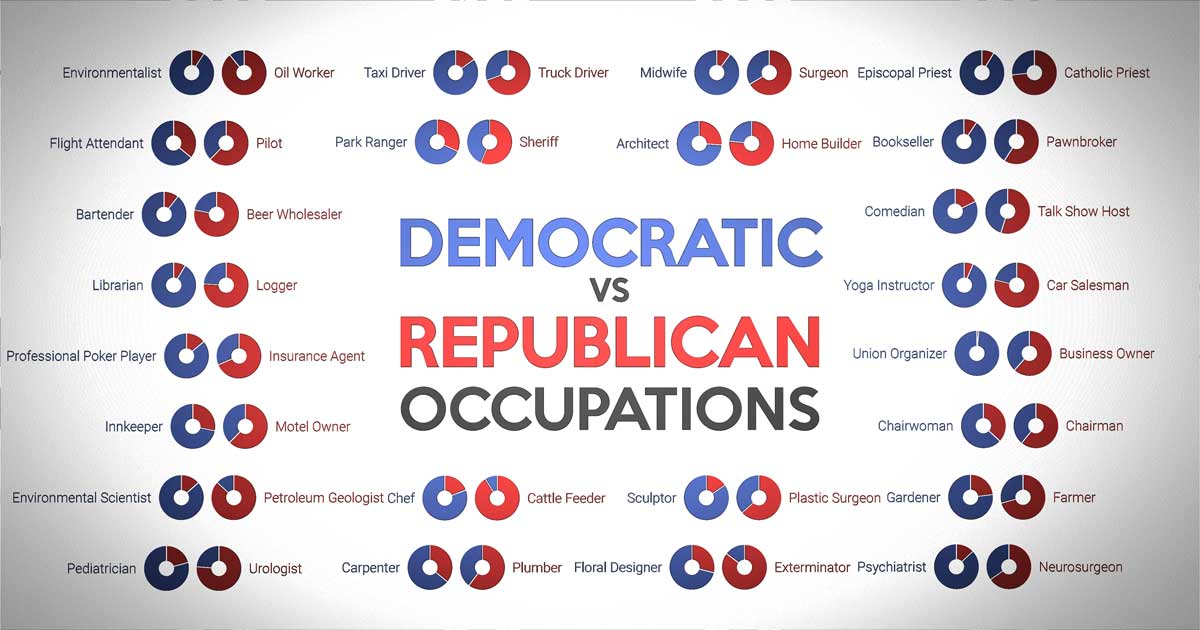
The Politics of Librarians

This just puts some statistics behind what I already knew - I am a stranger in a strange land. I'm a white male, religiously very conservative registered Republican. Most of my chosen profession is not any of those things. 

But there's no way we're biased or anything, right?

Nope, just strict fidelity to the pursuit of knowledge.


Graphic source:

http://verdantlabs.com/politics_of_professions/index.html

Thursday, March 10, 2016

Western Civ as a College Requirement?

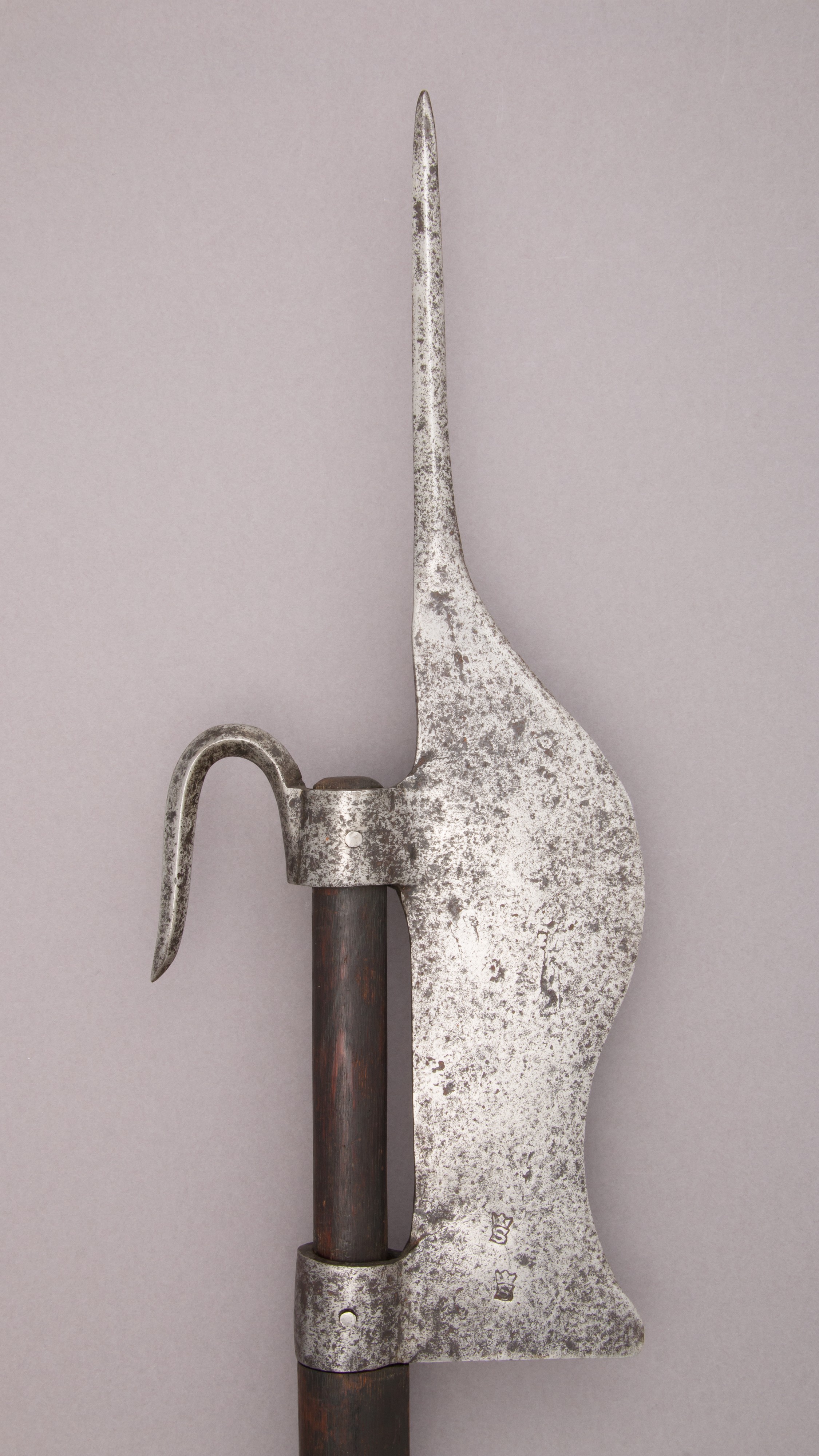
The Stanford Review has announced that a petition to reinstate the study of Western Civilization as a core requirement for all students has collected 
"over 370 signatures, qualifying it for the spring ASSU elections ballot in April."
The Review‘s petition will be voted on between April 7 and 8 by the Stanford undergraduate population. Vote for Western Civilization!
 
Sure, Western Civilization produced more than weapons. But it got your attention, didn't it?

After more than 20 years without this requirement, Stanford may now return this study, that of our own history, to the curriculum. Nothing occurs in a vacuum, certainly not education.  Whether a student is planning to be a psychologist or a chemical engineer, they deserve to know from whence their disciplines came.  Surely other civilizations played roles in the history of knowledge, but it is through the lens of Western Civilization that we perceive them; as the US is a product and a producer of Western Civ.  


Image credit: Metropolitan Museum of Art http://www.metmuseum.org/art/collection/search/34294


Wednesday, February 24, 2016

Free College? TANSTAAFL, buddy.

Some political candidates these days are suggesting that, like certain European countries, we should make college "free" to students. That idea's been around for a while, the MOOC and Open University concepts have been floating around higher ed for years. While the concept may eventually be made workable, something that becomes obvious even from a casual inspection is that all this 'free' education is not free.

The cost burden has simply been shifted from the students to others. Usually, that other group is you and me, the tax-payers. If the current candidates get their way (a big if, I say) it will be no different. Federal money (all of which it gets from us) poured in 50-gallon drums into the pockets of universities still has to come from somewhere. 

Here's another thing, too. 

What happens to a thing when you make it free?  The people who have access to the thing conclude that you now believe that the thing is of little or no inherent value. If the holder/creator of a thing thinks it valuable, that person will sell it to you - exchange value for value. This is, with almost no exception, the way humankind has operated since the days of barter.

When you take something formerly of value and declare it to be free, you are in effect stating that it is no longer of value.

https://www.aei.org/publication/dont-believe-in-free-college-as-a-panacea/
and
http://www.aei.org/publication/free-college-not-so-fast/

A thing that is of no value to the giver, is of little to no value to the receiver. Please explain to me how much the typical student enrolled in our 'free' and compulsory education system value the experience they are required to have.

I look at college students at my own school and note how many of them are more interested in their hobbies and parties and smart phones than they are in the incredibly expensive undertaking in which they find themselves. It was the same when I was in school myself - many acted as though going to class and getting an education was the last thing on their minds.

So don't make college free!  Make it less expensive (I've my own theories on that) but not free.

Friday, July 24, 2015

Educational Technology - Toys or Tools?

Probably it's some of both.

Stephen Bell discusses EduTech in his latest From the Bell Tower post. I'll be here when you get back from reading it.

Engage rant mode. 

Our library has its share of whiz-bang new technology. Our main library classroom, for example, has a  set of large monitors spaced around the room. Students can sit around the table by the monitor, and wirelessly connect their device to the monitor. The point of this is that when working on a group project, they can all be working on the same copy of the video, the document or picture, instead of emailing copies around the group and losing track of who's got the 'official' or 'final' version of the project.

At the front of the classroom are the big projection screens, attached to the monitor at the instructors stand. That computer has the same software as the big monitors, so that any group can pass their screen up to the projected screen and let the whole class see it. Multiple documents can be displayed at one time. 

That's great, but after two years with this stuff, I have yet to hear of any of the librarians using this technology in an Info Literacy or Reference Instruction session. It's not that we haven't been shown how to use the software; what hasn't happened is the opportunities for us as librarians to incorporate it into what we're trying to teach. A lot of us have very limited opportunity for teaching between faculty who don't ask very often, and faculty who ask us to cover only specific things.

Forgive me for sounding like an old Luddite, but I'm going to, a little. Why do we need this group project software in the library?  That's not where most classes meet, and certainly not on a regular basis, so the classes that are doing group projects don't get to use this very clever technology. 

We had a fellow from our campus Information Technology department come in to give us a lecture/presentation about using ed tech. His biggest point, which I could easily appreciate is that whatever level or amount of technology your library has available, the technology is still just a tool for the people doing the educating. People teach, technology assists. Technology does not teach anyone. This, I understand from an article Bell links to, is known as the Law of Amplification.

His second point was that when using ed tech, we should teach the method or process instead of  'how to use this device or software'. When I speak to classes about library research, I talk about the concepts that all database search interfaces share, not how to find articles in EBSCOHost.
"it’s a move away from an “I need the latest bright, shiny ed tech” mentality."
 Exactly.  In perusing the online literature and discussions of higher ed, I see/read a lot of searching for magic bullets, and an unhealthy dose of wanting to sound socially progressive and 'relevant' which often means uncritically embracing every new edu-fad and shiny technology that comes along.

I have listened for years to various higher education types both in and out of the library talk about the 'inevitability' of e-books overtaking and replacing print books. I'm still not convinced it's going to happen, and that it's going to happen within a generation. Perhaps I can point towards a few articles that show the continued viability of print, like this 
http://www.theamericanconservative.com/olmstead/save-the-print-library/

and this
http://www.infodocket.com/2014/10/18/winthrop-university-the-book-vs-e-book-e-book-survey-report/
  Or you can just take my word for it. This is of course far from conclusive, but at least it is clear I'm not alone in thinking that the techno-utopians who sigh for the death of the print book are going to be disappointed for some time to come.

Luddite moment over, everyone can relax.

Tuesday, March 31, 2015

Wild Idealism vs Messy Reality. Again.


Home  

Well, Kevin Carey's book The End of College has certainly gotten a lot of attention over at Inside Higher Ed. As of today, I've read three essays discussing the book, or discussing the ensuing discussion of the book. Try to keep up, if you have the time.


This is where I came in: Barbara Fister's take, "No Libraries for You!"
https://www.insidehighered.com/blogs/library-babel-fish/no-libraries-you

Then there was this book review:
https://www.insidehighered.com/news/2015/03/23/kevin-carey-talks-about-his-new-book-end-college

Then Audrey Watters and Sara Goldrick-Rab wrote this:
https://www.insidehighered.com/views/2015/03/26/essay-challenging-kevin-careys-new-book-higher-education

and Matt Reed wrote
https://www.insidehighered.com/blogs/confessions-community-college-dean/public-matters-response-kevin-carey

Then Joshua Kim wrote
https://www.insidehighered.com/blogs/technology-and-learning/dear-kevin-5-challenges-%E2%80%9C-end-college%E2%80%9D
and
https://www.insidehighered.com/blogs/technology-and-learning/criticism-vs-attack

Goodness, what a kerfuffle!  As if that wasn't bad enough, somewhere along the line the conversation got derailed into a discussion about sexism and something called "mansplaining".  What that might be, perhaps someone can elighten me. It sounds a bit silly to me. I thought the discussion was about whether the University of Everywhere idea would fly or not?

How often has this happened, that somebody gets a good idea, and runs waaaaaay past practical reality in declaring it to be the Answer To All Our Problems? 

The part of all this that gets me the most is the naive assumption on Carey's part that the University of Everywhere "brand" will, any time soon, replace the cultural capital that established schools have in terms of potential employers putting faith in the UofE graduate's actual comprehension.  There's a reason people want to to to Harvard - its reputation carries weight. It will take a long time for the UofE to get anywhere near that kind of reputation. And every slacker who coasts or cheats his way through to his 'badge' or certificate will be a barrier to the UofE reaching that point.

Maybe the UofE concept that Casey describes will come about. It will just be long after his 4-year-old daughter has finished graduating from whatever college she ends up choosing to attend. 

Saturday, March 14, 2015

So Colleges Don't Need Libraries Now? Right.


Barbara Fister over at Inside Higher Ed quoted this NY Times piece on her blog Library Babel Fish. I decided to read the whole article ("College for a New Age") before I read Fister's take, so I could write my own take. The part that librarians took issue with was this:
“You don’t need libraries and research infrastructure and football teams and this insane race for status,” he says. “If you only have to pay for the things that you actually need, education doesn’t cost $60,000 a year.”
 So what to make of this? Well first of all I have to agree with Mr. Carey about a lot of what he is supposed to be saying in his book. College is way expensive, and something's gotta give. I expect that the college library was not even his main target in the book. The quote might have been chosen by the journalist writing the piece because talking about getting rid of libraries gets people upset, and therefore talking about the article.

"Only pay for things you actually need," he says. Unfortunately, at least in the article Carey does not elaborate on what he thinks you need to complete your education.  Call me biased, but I think that you do need a library to succeed in college.

The library as a place is often derided as a collection of dusty old books. Fair enough, it is hard to keep the average library dusted; books create dust. Books also have been for centuries the primary record format for the accumulated knowledge of Western Civilization, and the place where you can go to get access to that knowledge. It is a continual frustration to me that the urban legend endures that says 'everything is on the internet, and it's all free".  No, no it isn't. 

Most current scholarship is publicized in ways that do not include dumping on the Web for anybody to read. The Open Access movement is changing that, but right now, if you want current research and scholarly writing, you have to pay for it yourself, or get access through some organization that has paid for it and will allow you to look too. In other words, a library.  
 
As it was in 1890, so it is in 2015

Oscar Wilde said in An Ideal Husband that "information is the modern commodity". If you want to be educated today, you need access to information. Libraries have it, and we take some of the hassle out of finding it. We'll even help you find it, or find it for you. 

A few other points

Not all colleges are focused on 'research'. Lots of schools still focus on teaching and the liberal arts. My school self-describes as a teaching university. The big research schools are a small proportion of all the colleges/universities in the United States. 

The article says that Carey explored online learning as an alternative to the traditional classroom model. Good for him. He is reported as saying his online class was a better experience than if he had sat in a classroom with the professor (who teaches at MIT). Well, that's nice, but it is pure speculation. He hasn't taken a residential class with this professor, so he has nothing upon which to build his comparison. Oh, and by the way, I work with professors who teach online classes as well as residential, and they want their students to use the library. How else are their students going to get the current scholarship?
They get it here. Of course.

I agree we do not need any more big, fancy football teams and stadiums. They are supposed to be money-makers, but that's not what college is about. 

It is probably true that in the future there will be other venues for certification and credentials that employers will accept. But you have to get the business world, which is also encumbered by cultural habit, to change its employment practices (like the resume, a bureaucratic dinosaur) before that can happen. And that's outside the world of higher education. We'll change more readily when the business world says they want it. 

There, that's my two bits. Now I'm going to go read Fister's take on it. Read it here, then tell me what you think about it. 


Thursday, February 19, 2015

Bad Bibliography part II

For the rest of this post to make any sense, you should read part 1 here first. Go ahead. I'll wait.

Bye Bye Bad Bib


The students in the Terrorism class (Studying it academically and how to fight it, not how to do it) made quick hash of my bibliography, but not in the way that I expected.They spotted all kinds of APA formatting errors that I had not noticed. Of course, I had not tried to get all the formatting right. Better still, this helped me to make the point that while many academic databases will offer citation formatting tools, they are not 100% accurate.


Captured from http://scholar.google.com, kw: "terrorism" "citation"

While the students demonstrated a better grasp of APA format that I had expected, they had more difficulty in spotting the content errors, despite my bibliography being rife with folly.

What Did I Do Wrong?


1.  The first one was the easiest to spot. This is simply a URL to a page from a fan-created wiki for the TV show 24.  No author attribution, no credentials, no good. 
2. I found this article using the library's multi-platform search tool SUMMON, so that's good, but it is actually a history article about 19th century anarchists, not modern ones.  The information is off-topic and out of date. No good.
3. The single-word title and publisher's name might be a clue here. Nobody caught this one, so I had to explain that this is a children's book on the subject. This will not be a complete treatment of the subject. No good.
4. An astute student caught this one right away. This book, while otherwise academically sound, was published during the Eisenhower administration. The information will be out of date, and therefore no good.
5. This one might be satisfactory, depending on how well it meets scholarly requirements. Its only problem here is that it uses MLA format, not APA. 
6. Apart from a host of formatting mistakes, this long-winded title obscures the fact of its source - the New York Times magazine. Magazine articles are usually not penned by scholars, and so lack credentials, and are likely too short to be thorough. No good. 
7. There's no author listed, but that's the least of its' problems. This sounds pretty off-topic, and the title phrase "your family's guide" betrays its very non-scholarly character. A disaster preparedness work is more of a public service announcement (as the professor dismissed it) than a worthwhile research source. No good. 
8. Much like the previous entry, this is less a discussion of terrorism than a lobbyist propaganda piece on the USA Patriot act. This will probably be incomplete, and almost certainly biased. Both are things you want to stay away from. No good. 

So I scored (maybe) one good entry out of the eight. Now that we had a look at what not to do, we spent some time talking about what questions to ask yourself. For a thorough explanation of evaluation criteria, I present Hope Tillman's classic work.  For everybody else, here's four things, briefly.
  1. Completeness  Does the resource cover all aspects of the topic?
  2. Authorship  does the author(s) have relevant academic credentials or professional experience with the topic?
  3. Objectivity  Is this resource presenting all sides of the topic fairly, or is it biased in favor of one aspect?
  4. Currency How up-to-date is the information given?  Age can quickly lead to incompleteness for 'current events' topics.
The college/university library attempts to handle these issues for the students by acquiring works with scholarly credentials, that are up-to-date and objective/neutral or at least open about their biases. Sturgeon's Law, my favorite corollary to the famous Murphy's Law, says "90% of everything is crud."  Librarians sort through the crud and find the good stuff that makes up the other 10%. That's how we roll.

Help! I've got a Bad Bibliography!

Later today I'm going to address an upper-level government class. The professor has asked me to discuss with them the process of creating the bibliography for their Big Paper. I thought I'd try an Active Learning approach to this, so I am going to present the class with my Bad Bibliography, and let them tear it to pieces. I made up this list with the intention of doing it wrong, and obviously wrong, to serve as illustration for what I will show them later about how to do it right. 

Books are still critical to good scholarship

The professor wants a minimum of five sources, simple not annotated, APA formatting, a mix of print and online, and no Wikipedia.  That doesn't sound too hard to do, does it?

Bad Bibliography!


Topic: Political terrorism in Europe as a means of influencing national policy.

Thesis: Terrorist groups use bombs and random shootings to force European governments to adopt more Marxist legislation.

1. “Terrorism” http://24.wikia.com/wiki/Terrorism
2. Di Paola, P. (2007). The spies who came in from the heat: The international surveillance of the anarchists in london. European History Quarterly, 37(2), 189-215.
3. Bingley, R. (2004). Terrorism. Chicago, Ill: Raintree.
4. Payne, R. (1950). Zero: The story of terrorism. New York: J. Day Co.
5. Wilkinson, Paul. Terrorism. Singapore: Marshall Cavendish Editions, 2012. Internet resource.
6. Ferguson, N. (2001). 2011: Ten years from now, historians will look back and see the events of sept. 11 as mere ripples in a tidal wave of terrorism and political fragmentation The New York Times Company.
7. Be prepared!: This is your family resource providing information necessary to get you ready for a chemical, biological, radiological, or nuclear (CBRN) incident. (2003). Aldermaston, Reading, Berks: Synigence plc.
8. The USA Patriot Act: A Century Foundation guide to the issues. (2004). New York: Century Foundation Press.


Good reader can you see what's wrong with this assemblage of sources?  Leave your criticisms in the comments section below. What do you think of my thesis? (Hint: it's not that good either)

After the class is over, I will follow up with how things went in class, and some places online where you can get help with compiling a Good Bibliography.
Part Two is now posted.

Wednesday, January 21, 2015

Free Education?


From Inside Higher Ed, "Provost Prose" blog 1/18/15

"There is no question that the credentials required for more and more job opportunities include more and more education. Opportunities that in the past required a high school education now require a college degree; opportunities which used to require an undergraduate degree, now require an advanced degree. Often these escalating requirements make sense and, yet, there are certainly times when these changes just serve to reduce the pool of applicants rather than enhance job performance."

Back before grad school, I consulted the classic job-seeker's guide What Color is Your Parachute? for help. One thing that above all the other advice stayed with me over the years is this: HR departments are not there to help you get hired, they are there to weed you out of the applicant pool - to keep you from getting to the person who has the power to hire you. It seems that I am not alone in this perception.

How long has it been since most companies allowed the supervisors and managers in the departments do the interviewing and hiring of new candidates? What is it that uniquely qualifies an HR staffer to determine whether someone will be able to do a job? Yes, yes, I know that many times there are scores or hundreds of applicants for an open position. Surely there must be a more efficient way of handling this than the bureaucratized mess we have in most companies today. 

But my point is really this: all the education in the world isn't going to help much if you can't get into a position where you could get hired for a job. Eliminate some of the process barriers to getting hired; which includes the local, state and federal employment regulations.

From the same Provost Prose blog:

"For as far back as I can remember, our society provided the opportunity for every student to receive an education through high school."  

Well, then you are not remembering very accurately. For the whole of the 20th century, K-12 education was not an opportunity, it was compulsory. The author's parents could have gone to jail if he had not reported to government school on time. Not only was it compulsory, his parents were also compelled by the tax structure to pay for the school (property taxes, most likely) and could go to jail if they didn't pay. This is the unpleasant fact of "free education" that the proponents don't want to talk about. 

Free Education is not free at all. What, are the teachers going to teach for no pay, and the campus staff maintain the campus out of humanitarianism? No, they will still expect to get paid. That means someone has to give them money. That will either be the students directly, by paying tuition, or ALL OF US indirectly by paying additional taxes. 

I continually marvel at the fact that 'educated' people can be so infuriatingly ignorant of this very simple cause-and-effect principle. Education costs money, because it is a service, just like cleaning the streets or installing the plumbing. 

Read this piece from The Huffington Post.

And then this one from Inside Higher Ed

Why do we need more formal education? 

There's also this piece from The Federalist.


 My first two jobs were working as an office assistant for a local special education office, and receiving books from the shippers at a big-box bookstore. Neither of them really needed a person with college education, yet both asked for this in the job description. Why?  

A college education will prepare you for some things, but so will getting a job and doing it well. The jobs that college prepares you for, those should be the ones with a BA/BS requirement. Everything else (which these days even people with Masters degrees are competing for) should be open to folk who are willing to do the work, not just those who have a fancy piece of paper on the wall.


Sunday, January 11, 2015

Far From the Maddening Crowds


"We live in an age of chattering masses,"  writes librarian Mark Herring of Dacus Library, Winthrop University, in the library journal Against the Grain (Feb 2014 v26,1).  "Everybody talks to everybody else," but nobody is listening, he says. Well, I listened. I also asked his permission to extensively quote his article, and then give my hopefully well reasoned response to it. Here it is. For the remainder of this column, anything in italics are his words.
                In our hyper-connected age, everybody talks to everybody else, with all sorts of entertaining news . . . we 'blow up' the Twitterverse with our claptrap that masquerades as real conversations and human connections. Essentially we are talking to ourselves because no one is really listening.
                Why is no  one listening?  Is it because we're too enamored of our own opinions?  On the 'nets we are free to spout our opinion, often behind a protective layer of anonymity. This gives the added bonus of not having anyone get in our faces about what we've said. There's no consequences to commenting or re-tweeting. It might be, however, that we are instead too insecure in our opinions so that we must shout them louder than everyone else, lest we hear a contrary view that might upset our world. 
                We talk about nothing because to talk about something requires that we stop and think, read, study and consider. If we do that, we might miss something else as it goes zooming by. Our culture, particularly online culture thrives on the new and on things happening fast. This is not in itself new; St Luke notes in the Acts of the Apostles (17:21) that the Athenians spent all their time telling or hearing some new thing. The difference is that today the new thing arrives much more quickly. If we stop to think about any of it, several other things will have passed us by.
                We enjoy Twitter nitwits like Anthony Weiner . . . In many ways people like this deserve what they get, courtesy of the lightning rod we call the Internet.
              Nitwits like Weiner are ubiquitous - it is just that they now have a wider forum in which to display nitwittery. Lack of discretion and foolishness is also a part of the fallen human condition, which is to say it's not new either. The 'nets just make them visible to more people, for a brief period.
             The chattering masses may just want to be heard, to be recognized, to have someone validate their existence. I regretfully note that I check my page counts more than once a week. I am not immune to the lure of Internet fame. It is sad to think that counting 'likes'  or re-tweets may be the new Man's Search for Meaning. Why should we accept this "claptrap that masquerades as real conversations and human connections"? We need conversations and connections, but we simply will not find them on Twitter.  Twitter, by the way, is not the Internet. One can find a form of community online, if one looks for smaller venues that the Twitterverse - forums and blogs and discussion boards that have a common theme, whether hobbies or beliefs or what have you. I have had many informative and sometimes challenging conversations with others online who share my interests. This is still not the same thing as my friends with whom I play games or worship or do my work, but it is not nothing. It cannot however substitute for the real thing.
                It is an unfortunate truth that we often end up with the results that we fear because of something we did – especially when we are afraid or insecure – which is very common for the post-modern chattering masses.  We want to be heard, but don't listen. Listening is the first step to being heard: if you want others to listen to you, start by listening to them. By shouting (or TYPING IN ALL CAPS) we try to force others to listen to us, but it doesn't work. It may even encourage louder shouting on their part, to get you to listen to them.
                Twits, like Weiner and others, try to get our attention by being outrageous, but how long will it be before his stupidity is so commonplace as to no longer be shocking?  Then we will experience a new depth of outrageous stupidity, and another, and another. We deaden our sensibilities by continuing to absorb the barrage of outrageousness and ridiculousness, and eventually nothing is shocking. We can lose our ability to be shocked, and in the process, our ability to feel anything. 
          “This isn’t so much a reading problem – though it certainly is that - as it is a cultural shift to react, not think, to post, never reflect, to chatter and not shut up for even a second . . . for this we are giving up newspapers, personal communications, books, libraries and Lord only knows what else!?”  I don't Tweet, but I do read and write blogs. The ones I read most often are focused on specific activities - like librarianship, or writing, or my other job, sci-fi role-playing. Of the blogs that I read, I can say that I rarely come across a post that, whether short or long, isn't thought out and expressed with clarity. Often I find myself thinking, "now why didn't I write that?" or "I could write something about that myself". 
                I find these things that Mr. Herring says sad, rather than maddening. The Internet is a very large pond indeed, and we are very small fish. This in itself is difficult for most people (even me) to accept. Shout as we might, it's not going to make a lasting impression. With so many people making ripples on the pond, whatever ripples I may make will be swamped and broken up almost immediately.
                Europeans have long thought of Americans as shallow, frivolous and a bit too silly. But are we a bit too superficial for our own good?  Yes, of course we are. The Europeans look at us and think “Been there, done that” as if their jaded decadence is somehow better than the mess we've got. And of course, it is not like the Internet only exists in America. There are plenty of Euro-nitwits out there cluttering the Twitterverse, I'm sure.
                Andy Warhol supposedly promised everyone would be famous for 15 minutes. What are we supposed to do when the fifteen minutes are up and we get washed back into obscurity? Unplug. Get off the 'nets and go have a conversation with someone face to face. Accept our (relative) obscurity. We are not obscure to God. He made us to be in relationship with Him and with each other – in person, not as text on a screen. The 'nets are nice for information, weather reports and funny cat videos. But it is not where we were meant to live. 
                The irony is not lost on me that I have suggested that people unplug and spend less time online – on a social media site. Nor is it lost on me that almost no-one will read this. I must not be shouting loud enough.
Thursday, August 21, 2014

Tales of the Roaming Librarian - Fall Semester Kickoff Tour

The fall semester has begun! There are students in the library again, I'm so excited!  
I've got a new, improved version of my sign from last semester, courtesy of our graphics specialist:
How cool is that?!?
 
I've already chatted with several students, and some visitors touring the library. One young lady was so excited that I helped her find Paradise Lost and some lit crit to go with it that she forgot to take the primary text with her. I had to track her down in the reading room to deliver the Milton.


OK, so this is not the result of Roaming Reference, but I wanted to mention it. A student contacted me by email, saying he was having trouble looking up county ordinances for a county in a Central/Midwest state. I do not know if this student comes from that county or not, but for his own educational purposes, he wanted to know about this county's ordinances. He searched the county website and did not find what he wanted, so he inquired of me if the library had a database of county ordinances that we could search.

We don't. So I looked over the county website as well, and lo and behold, there was the name and telephone number of the deputy county clerk. Well, there's someone who should know about county ordinances. So I rang her up, stated the problem and she was quite happy to have the student contact her with his question.

Now, why mention this?  Because the myth that "everything is on the Internet" apparently is still going strong. No, no it isn't people. Probably not going to be any time soon, as every KB of data loaded onto an Internet server means someone had to spend time and likely money to put it there. Not to mention all of the stuff that's accessible only by subscription - like most of the academic journals our library pays big bucks for, to give the students access.

And one more thing: I want one of these, but the I can't get the campus print shop to make them for us.
Gorramit, we want those overdue books back!

Oh well, maybe next year. Roaming on . . .