Powered By Blogger
Showing posts with label Western Civilization. Show all posts

Tuesday, July 19, 2016

What I'm Reading Now - In Defense of Elitism


What I’m reading Right Now: In Defense of Elitism by William A Henry III
(Anchor Books, 1994)
Why I’m reading it:
An essayist writing in The New Criterion mentioned the book. Long ago I decided that I am not an egalitarian; some people are just better at things than others. I have also long believed that Western culture is superior, not just because it is the culture I belong to, but because of its massive output of science, art, literature and music as well as political liberty. Henry argues for the benefits of recognizing and fostering excellence, rather than celebrating mediocrity.

 He does not explicitly define egalitarianism, but I think this suffices well: (p. 12) "we have foolishly embraced the unexamined notions that everyone is pretty much alike (and worse, should be), that the common man is always right, that he needs no interpreters or intermediaries to guide his thinking, that a good and just society should be far more concerned with succoring its losers than with honoring and encouraging its winners to achieve more an thereby benefit everyone."

What I think of it:
It is not quite what I expected – Henry is an unabashed liberal. However he is an honest one, and I think that if we had gotten the chance to meet, (he reposed in 1994. May he rest in peace.) we could have gotten on very well, first of all by being honest and forthright about our starting assumptions. The first chapter alone contains several swipes at the idea of religion. He hasn’t singled out Christianity, instead he criticizes general religiousness. At the same time, he pulls no punches in his criticism of political correctness, or ‘special pleading’; of revisionist history, and the growing blight of entitlement without regard to actual performance or contribution.

Will I finish it?
Yes. His writing style makes for quick reading. Although the subject matter and his examples from the (then-current) headlines may leave one heavy-hearted, his style is more newspaper than ponderous scholarship.

Would I recommend it?
Yes. It is refreshing and encouraging to hear someone who is not on the political Right (where I am) argue against the dangerous path that post-modern liberalism has set itself upon. Henry’s criticisms are just as timely in 2016.

Gimme a quote:
The whole book so far is quotable, but copyright forbids. Here are a few, italics for emphasis mine.

(p. 25) – Henry is discussing the supposed egalitarianism of ‘60s campus radicals: “Indeed the dirty little secret of sixties radicalism - I know, I was there - was that many of its most aggressive proponents were those who felt the deepest elitist yearnings. Their avarice was transmuted into leftist rage by the fear that they might not prevail, that in a fiercely meritocratic contest they might not qualify for the house with the white picket fence and the Beamer in the three-car garage. To them, society was unjust if it would not give them what they wanted. Their very definition of fairness, while shouted to the skies in egalitarian terms, was the result of thwarted or imperiled elitist ambition.”

(p. 54) Here, he quotes Arthur Schlesinger Jr.: “Let us by all means teach black history, African history, women’s history, Hispanic history, Asian history. But let us teach them as history, not as filiopietistic commemoration. The purpose of history is to promote not group self-esteem, but understanding of the world and the past, dispassionate analysis, judgement and perspective, respect for divergent cultures and traditions, and unflinching protection for those unifying ideas of tolerance, democracy, and human rights that make free historical inquiry possible.”

Friday, April 15, 2016

Communism and America

I've recently become fond of reading the blog of John C. Wright, sci-fi author and devout Catholic. Yesterday he shared this post, about a revelation his wife had concerning Communism and the 'Red Scare'.


http://www.scifiwright.com/2016/04/could-not-have-been-more-wrong/

Yes, Virginia, there are Communists, and they mean to do exactly what they say they mean to do, starting with lies and propaganda and ending with death camps and genocide, all the while promising free health care.

And … the Left are afraid of McCarthy and people like him, but not afraid of Mao and people like him.
Also read his wife's discussion of this topic, found here.

They had as an avowed goal: designing public schools so as to break up the family and make the children idea future Communists.
The Communists attacked the Church, demonized it, and tried to separate workers from their priests at every turn. Bella saw this over and over and gave some examples. She also admitted to helping over 1,100 communists get into the Roman Catholic Church, with plans to alter and destroy it from within.
They also attacked race harmony in America. Word came from the Soviet Union that America’s racial peace and its morality were its strength, so these things had to be destroyed.

Because Western Civilization is still worth fighting for.

Tuesday, March 29, 2016

Introducing the Open Music Library!

The Open Music Library is a new initiative from Alexander Street to build the world’s most comprehensive open network of digital resources for the study of music.

Curated by a community of music scholars, students, teachers and librarians, the Open Music Library brings together peer-reviewed journal articles, books and music scores from the world’s digital collections.

Leveraging shared ontologies, linked open data and principles of the semantic web, the Open Music Library integrates disparate digital collections and establishes meaningful links between the items they hold.


By aggregating, enriching and integrating valuable primary and secondary sources, the Open Music Library aims to not only advance the state of the art in music knowledge discovery, but also increase opportunities for creative reuse, and promote new possibilities for research and collaboration.

Visit the Open Music Library

E Pluribus Unum, an American National Song, Arranged by Edward Pendleton


Tuesday, February 9, 2016

Western Civilization and Prosperity

Continuing on with my recent theme about Western Civilization, here's a TED Talk on the question of why the West has been so very good at creating prosperity, in comparison to the rest of the world. It's not geography, it's not even culture exactly.


Ferguson lists six factors which exist in the West more than elsewhere that contribute to prosperity:

Tuesday, February 2, 2016

So you're into opera now?

Maybe. I've recently signed up to get The Critic's Notebook, "Weekly recommendations from the editors of The New Criterion on what to read, see, and hear in the world of culture."

This week they recommend that I get tickets to the Metropolitan Opera to watch Maria Stuarda, which I'm guessing is about Mary Stuart, queen of England, better known as Mary Queen of Scots. 

Obviously this is from before she gets her head cut off.
I am not a fan of opera; but I'm not opposed to it either. The Broadway musical Phantom of the Opera is about as close as I get to opera most of the time, but I (and you) should be willing to give it a try.

Here's a video still from the Met's website:


I can't get the video to work, so follow the link at the top and scroll down to it. Or try this YouTube video.

Because Western Culture is worth celebrating.

Monday, January 18, 2016

NYPL Image Collections now in the Public Domain!

From the New York Public Library's Website:
Today we are proud to announce that out-of-copyright materials in NYPL Digital Collections are now available as high-resolution downloads. No permission required, no hoops to jump through: just go forth and reuse!
Thank you NYPL for making these available. 
 
Oh, by the way, the concept of the Public Domain is a artifact of the Western legal tradition.

Go enjoy some free images, like these, to make your blog look cooler.

Partying like it's 1799!

Friday, January 8, 2016

What I'm Reading Now - Clash of Civilizations


What I’m reading Right Now:
The Clash of Civilizations and the Remaking of World Order by Samuel P. Huntington

Why I’m reading it:
His name was mentioned in an article I read recently, and I remembered that my friend Dallas recommended him years ago.

What I think of it:
I think that Dr. Huntington’s assessment of the shift in international relations was spot on. He wrote the book in 1996, but the world of 2015 looks like what he described.

Will I finish it?
Yes, in time. It is not the thickest book I’ve read, but it is long, and bears close reading. Huntington’s language isn’t overly academic but it is complex.

Would I recommend it?
Yes. His tone is serious but reserved, he's obviously well-read, and makes his points with logic and explanation. It's a good tonic against the over-heated emotional rhetoric of the popular media. We need more reasoned & reasonable voices in our public debates, whatever your position on international affairs.

Gimme a quote:
“Civilizations in the plural are the concern of this book. Yet the distinction between singular and plural retains relevance, and the idea of civilization in the singular has reappeared in the argument that there is a universal world civilization. This argument cannot be sustained, but it is useful to explore, a will be done in the final chapter of this book, whether or not civilizations are becoming more civilized.” From chapter 2, p 41.


Image courtesy of STRATFOR, https://www.stratfor.com/sites/default/files/styles/stratfor_large__s_/public/main/images/clash-civilizations.png?itok=cGgRzieJ

Wednesday, December 23, 2015

The Met's Open Acces for Scholarly Content

The Metropolitan Museum of Art is offering rights-cleared access to over 400,000 digital images of objets d'art in their collection. 

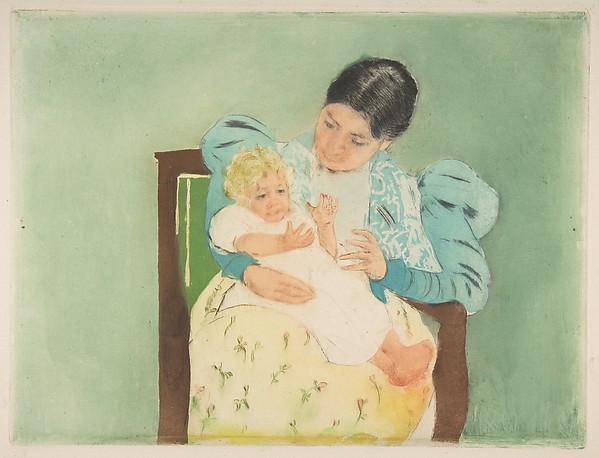
Works that are covered by the new policy are identified on the Museum’s website (http://www.metmuseum.org/collections) with the acronym OASC. Like this one:


Mary Cassatt's The Barefoot Child


And yes, they have works that are not the product of Western Civilization. Because we should enjoy them as well. 

Read the full announcement here:


OASC was developed as a resource for students, educators, researchers, curators, academic publishers, non-commercial documentary filmmakers, and others involved in scholarly or cultural work. Prior to the establishment of OASC, the Metropolitan Museum provided images upon request, for a fee, and authorization was subject to terms and conditions.
Additional information and instructions on OASC can be found on the Museum’s website at http://www.metmuseum.org/research/image-resources/frequently-asked-questions.

The civilization most concerned with property rights is also concerned about sharing the results of creative work. Because Western Civilization should be shared and celebrated.

Image credit: http://www.metmuseum.org/collection/the-collection-online/search/377420

Friday, December 18, 2015

Eine Kleine Nachtmusik

Wolfgang Amadeus Mozart composed Eine Kleine Nachtmusik (A Little Night Music) in 1787.

You may be cool, but you're not "my first name has Wolf in it" cool.

Eine Kleine Nachtmusik is the byname of Serenade No. 13 in G Major, K 525,  serenade for two violins, viola, cello, and double bass by Wolfgang Amadeus Mozart, admired for its lively, joyful quality and its memorable melodies. The piece was completed on August 10, 1787, but was published posthumously. In present-day practice, it is typically performed in orchestral arrangement.

Mozart produced many serenades, the 13th of which, nicknamed Eine kleine Nachtmusik, is his best known. The four-movement work opens with a bright allegro in sonata form, and a slow, lyrical second movement follows. The third movement is a light minuet, and the finale is a brisk rondo. Originally, the piece contained a second minuet, but that movement has been lost. The specific occasion, if any, for which Eine kleine Nachtmusik was composed has never been determined.

Because Western Civilization has some of the greatest works of art mankind has ever known.


Britannica Academic, s. v. "Eine kleine Nachtmusik," accessed December 18, 2015, http://academic.eb.com/EBchecked/topic/1210597/Eine-kleine-Nachtmusik.